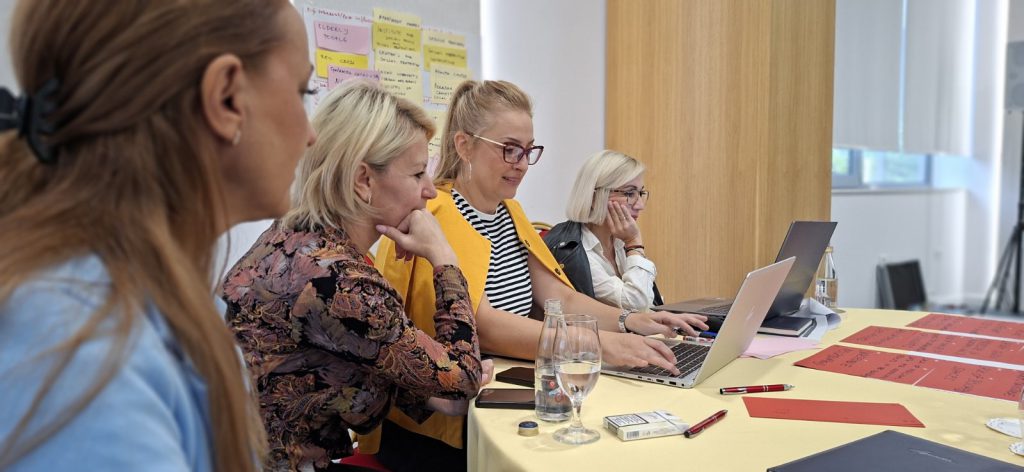

On 16 and 17 July 2026, NALAS organised the LORAI Dashboard Regional Workshop in Skopje, bringing together representatives of the project partners to discuss the involvement of local governments in the implementation and monitoring of the Reform Agendas in the Western Balkans.

LORAI – the Local Observatory on Reform Agendas Implementation in the Western Balkans, is a joint EU-Council of Europe Programme implemented by the Congress of Local and Regional Authorities of the Council of Europe, in partnership with NALAS, the Council of European Municipalities and Regions (CEMR) and seven NALAS member associations.


Officially launched last April, LORAI aims to assess the role of LGs in the implementation of the Reform Agendas and lay the foundations for strengthened local governements’ involvement in their implementation and monitoring.
The LORAI Dashboard Regional Workshop marked one of the project’s key milestones, following the baseline study assessing the state of play of local governmenets’ involvement in the Reform Agendas across the region. The workshop aimed to validate the baseline study findings, discuss and verify monitoring indicators, Consult local governement associations leadership on the data collection, analysis and reporting process and shape the future LORAI Dashboard reporting logic.

Bringing together local and central perspectives
The first day of the workshop focused on the findings of the baseline study. The perspectives of local governements were highlighted through presentations by local government associations and considered alongside preliminary findings from interviews conducted with central governments by KDZ – Centre for Public Administration Research on behalf of the Congress.


The exchanges brought together economy-level findings, central-level perspectives and cross-economy analysis, allowing participants to identify common challenges as well as differences across the region.
The discussions confirmed the very rationale behind LORAI: while countries differ in their level of readiness for RA implementation, local governments across the Western Balkans have a limited role in the majority of Reform Agenda policy areas. They are mainly viewed as implementing actors, without being provided with sufficient capacities, whether financial or technical, or being adequately involved in decision-making processes.
This represents a challenge not only for the current refom agendas but also for future similar reform processes. Local governments consistently face the consequences of decisions taken at the central level without necessarily being provided with the corresponding capacities or, more importantly, being recognised as strategic partners.
From indicators to the LORAI Dashboard
Building on the first day’s findings, the second day focused on identifying the Reform Agenda implementation indicators with the greatest implications for local governments across the region, along with existing Reform Agenda data and their owners, as well as the associated financial implications.


Organised partly in a world café format, the discussions allowed participants to review and prioritise draft indicators and reflect on economy-level and regional monitoring needs. Participants agreed on key indicators while also highlighting potential challenges each economy may face in implementing and monitoring Reform Agenda measures at the local level, from identifying the most effective ways to collect data to analysing the channels through which financial resources can be secured for the implementation of Reform Agenda measures.
The workshop also provided an opportunity to reflect on the data collection, analysis and reporting process for future LORAI monitoring cycles.

These exchanges contributed to shaping the first outline of the LORAI Dashboard, developed by NALAS. To this end, discussions explored its potential target audiences, policy purposes, structure and added value compared with existing EU or CSO monitoring dashboards.
The LORAI Dashboard will serve as a clear and accessible tool for closely monitoring the implementation of Reform Agenda measures from a local government perspective, contributing to a stronger evidence base for advocating for the effective involvement of local governments in the implementation and monitoring of the Reform Agendas in the Western Balkans.