How can town-twinning and cooperation between municipalities move beyond formal agreements and become meaningful platforms for youth participation and regional exchange?
This question was at the heart of the Study Visit and Regional Working Seminar “From Twinning to Transforming: Youth-Inclusive Decentralised Cooperation as a Peacebuilding Instrument,” organised by NALAS in partnership with UNDP in Ohrid, from 1–4 September 2026, within the regional UN Joint Programme “Youth 4 Inclusion, Equality & Trust.”
The seminar brought together 20 participants from the Western Balkans, including local decision-makers, municipal youth officers, representatives of Local Government Associations, Local Youth Councils and youth organisations.
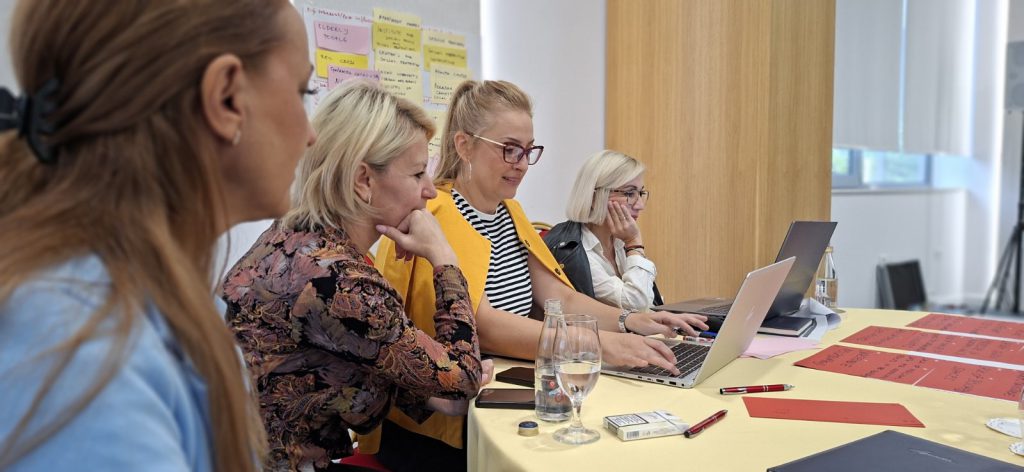
Over four days, participants combined peer learning, study visits and practical working sessions to explore how decentralised cooperation can contribute to the localisation of the Youth, Peace and Security (YPS) Agenda and create stronger opportunities for young people to shape cooperation between municipalities.
From formal partnerships to meaningful youth participation
The programme started by looking at the reality of municipal cooperation in the region: Who already cooperates with whom? How are young people involved? And how can town-twinning contribute to inclusive communities?
Participants mapped existing municipal partnerships and explored their connection with the five pillars of UN Security Council Resolution 2250: Participation, Protection, Prevention, Partnerships, and Disengagement and Reintegration.
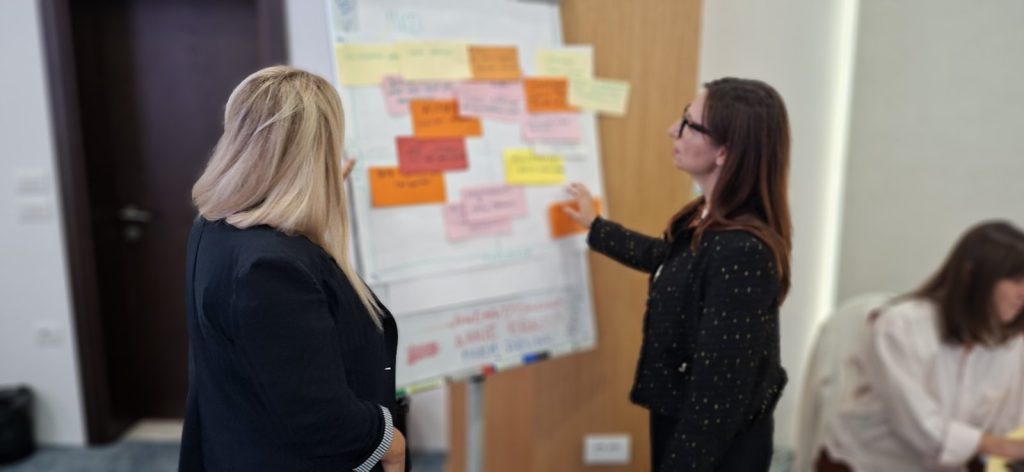
Using a practical Ladder of Youth-Inclusive Decentralised Cooperation, participants assessed the level of youth involvement in existing partnerships — from ceremonial cooperation and consultation, through participation and co-design, to arrangements where young people have an institutionalised role supported by a mandate and budget.
The exercise helped participants identify not only where their municipalities currently stand, but also what could help move their cooperation to the next level.
Learning from what works — and what does not
The Regional Marketplace of Good Practice brought municipal experiences from across the region into one interactive space.
Rather than presenting only success stories, participants examined what was actually done, who cooperated, how young people were involved, what made the partnership possible, how it was financed, what went wrong and what they would do differently.
Through rotating exchanges, participants questioned the mechanisms behind each practice and identified approaches and contacts that could be useful back home.

The seminar also included study visits to the Municipality of Ohrid and Youth Centre Ohrid, where participants used a structured observation approach to examine how youth participation works in practice.
The visits focused not only on formal structures, but also on questions of mandate, financing, participation, decision-making and sustainability — encouraging participants to look beyond what exists on paper and examine how local mechanisms function in practice.


Turning cooperation ideas into fundable initiatives
Another important part of the programme focused on the European funding landscape for youth-inclusive decentralised cooperation.
Participants explored opportunities under CERV, Erasmus+, Interreg IPA, RYCO and other European and regional instruments, while working through practical questions of eligibility, partnerships, deadlines and institutional capacity.
The objective was not simply to present funding programmes, but to connect them to real cooperation ideas emerging from the group.


This work continued through the Town-Twinning Design Clinic, where participants formed teams, developed potential cooperation initiatives and received structured peer feedback on their feasibility.
By the end of the process, ideas were being connected with potential partners, funding instruments, deadlines, and concrete first steps.
From Ohrid to the next step
The seminar showed that decentralised cooperation has the potential to be much more than a formal agreement between municipalities.
When young people have a meaningful role, partnerships are connected to concrete activities, and municipalities have access to the right partners and resources, town-twinning can become a practical platform for regional dialogue, learning and cooperation.
The results from Ohrid will feed into NALAS’ further work on decentralised cooperation and the localisation of the Youth, Peace and Security Agenda, including the development of the NALAS Toolkit on Decentralised Cooperation and Town-Twinning and follow-up within the Regional Forum of Mayors.
NALAS thanks all participants, partners and hosts for their openness, active engagement and willingness to share not only achievements, but also challenges and lessons learned.
These activities are being realized within the Youth 4 Inclusion, Equality & Trust project. Supported by UN Peacebuilding Fund (PBF), the initiative is implemented jointly by four UN agencies: United Nations Development Programme (UNDP), United Nations Population Fund (UNFPA), UNESCO and UN Women.